

Where the Rubber Meets the Road at USask School of Public Health
How the Driving Research and Simulation Lab is innovating life on Canadian roads
By Adele PaulOne might not typically associate driving with public health, but accidents rank just behind cancer and heart disease as the leading causes of death in Canada–a risk that is increased for both the old and the young. Driving impacts everyone, but the good news is that, for those accidents that happen on the road, much can be done to mitigate the risk. That’s where the rubber meets the road for director, Dr. Alexander Crizzle, and his team at the University of Saskatchewan’s (USask) Driving Research and Simulation Laboratory (DRSL). Their mission is to generate research that will inform and enable evidence-based policy that ultimately makes life safer on Canadian roads.

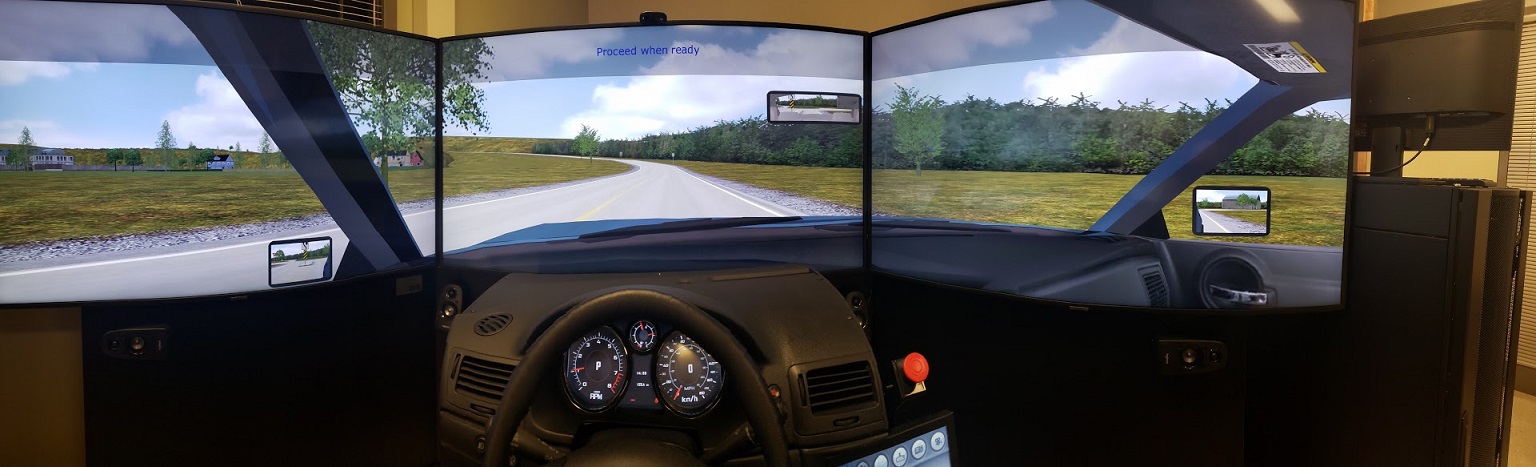
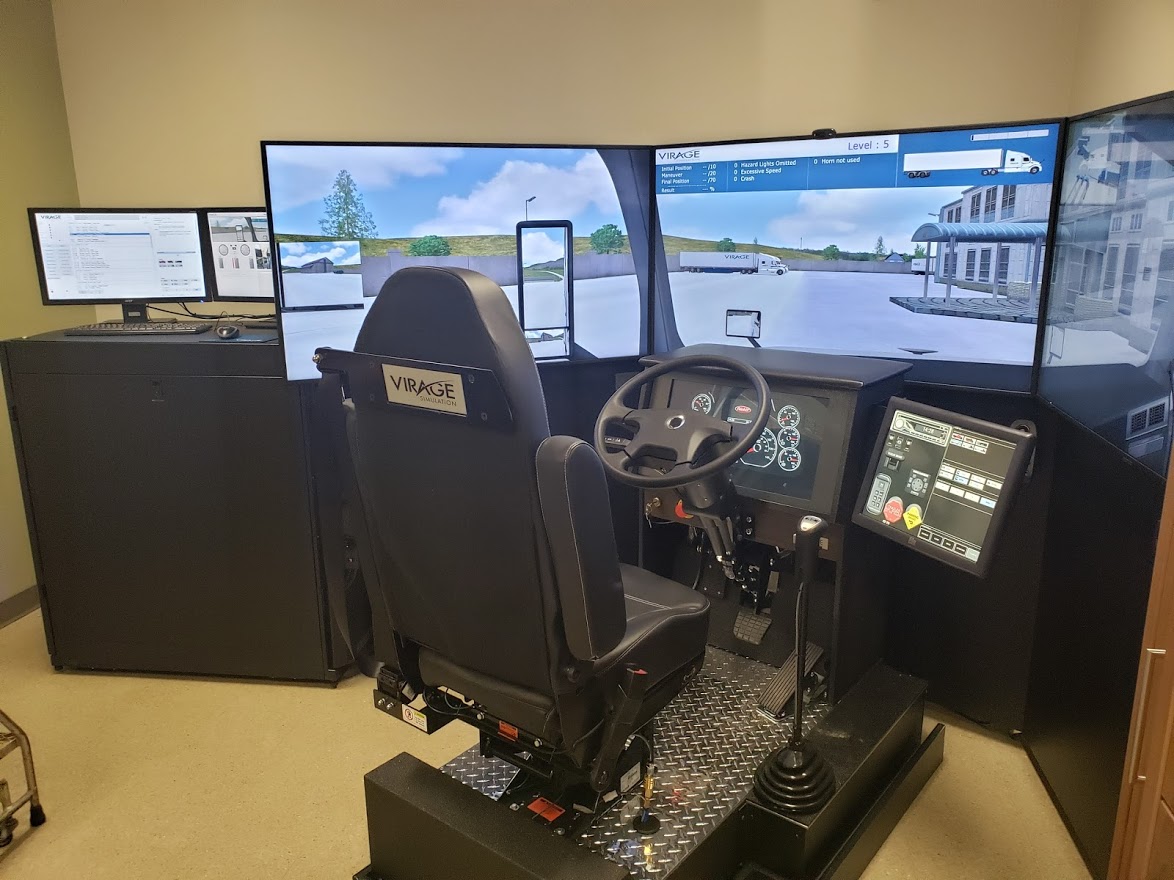
The lab runs out of the university’s School of Public Health, located in the Health Sciences Building and is equipped with state-of-the-art technology including the means to test vision and cognition, a car and a commercial vehicle simulator, virtual reality (VR), and specialized software to run microsimulations. The simulators and VR are able to deliver true-to-life driving experiences including modeling unfavorable conditions and road hazards while the vision and cognition tests can be used to inform research at the level of the individual driver. But how does this impressive collection impact driving safety? The answer lies in the many research projects that the DRSL spearheads or works on as a collaborating partner.
One project aims to address the higher crash risk associated with young drivers. Participants–local learner drivers–use the car simulator to perform a series of training exercises in advance of getting their license. The purpose is to expose them to road hazards they might not otherwise encounter during their training and to help them develop responses that lead to fewer crashes. After the recruitment and testing phase, the research team plans to follow participants for five years to determine whether there is a reduced crash risk for those who received the simulation training versus those who didn’t. As might be expected, SGI and Transport Canada are very interested in the results and have partnered with Dr. Crizzle financially in this research pursuit. If all goes well, the long-term hope is to develop simulator training modules for learner drivers that mitigate crash risk.
Another series of projects in the lab, spearheaded by Ph.D. student, Mackenzie McKeown, employs a variety of research techniques to identify and address safety, health, and quality of life concerns for truckers in North America. Mackenzie is in the process of recruiting long-haul truck drivers for the first part of her study in which she will gather evidence about how objective indicators of health impact a driver’s performance on the road. The second part of her project involves surveying drivers about how to improve their experience on the road, particularly with regard to amenities offered at truck stops. Mackenzie says drivers are constrained by their vehicle, their route, and the limitations of truck stops all of which have the potential to impact their health and overall experience on the road. Mackenzie hopes her research will give a voice to the concerns of truckers. Dr. Crizzle is currently leading the development of an app that identifies resources for truckers including gas stations, hydrogen fuel cells, weigh stations, food, and parking spaces.
Linked to this research interest, the lab has also taken an active role in addressing the chronic shortage of long-haul truckers in Canada. New drivers are in constant demand as those already in the profession are compelled to work longer hours and take more routes to fill the needs of the market. Part of the issue is a gap in the availability of training for new drivers so the DRSL recently partnered with YWCA to train new women truck drivers entering the profession using their commercial vehicle simulator.
One of the key mandates of the DRSL is to collect diverse data on driving safety. This involves some creativity on their part and often demands national and international collaborations that have the potential to further the research interests of the lab. One such collaboration involves the implementation of a web application that collates electronic medical records (EMR) of drivers undergoing clinical assessments. The project includes occupational therapists in Saskatchewan, Ontario, and Quebec who have been able to streamline their intake process through the use of the EMR and who are able to attend to vulnerable drivers more quickly.
Another collaboration involves the Thailand government which wants to target high-risk intersections and test the impact of interventions on crash risk. The team at the DRSL uses computer modeling technology to construct a virtual model of the intersection including moving traffic which can be used to collect data on how the structure of the intersection and the introduction of interventions impact crash risk. The data from these pursuits, in addition to all the other projects at the DRSL, build over time and can be used to influence traffic interventions and develop policies based on evidence.
As for the future of the DRSL, Dr. Crizzle envisions expanding the network and research possibilities of the lab through connections with local, municipal, and international governing bodies as well as industry partners who share the same vision–safe, efficient transport that serves everyone. Oh, and an autonomous vehicle kitted out with cutting-edge data collection capability wouldn’t hurt…
The Driving Research and Simulation Laboratory is currently recruiting:
- Young (non-licensed) learner drivers with at least some road experience
- Long-haul truck drivers from Canada
- And graduate students with a vision to tackle the next road safety challenges
Please contact Dr. Alexander Crizzle at alex.crizzle@usask.ca or 306.966.2773